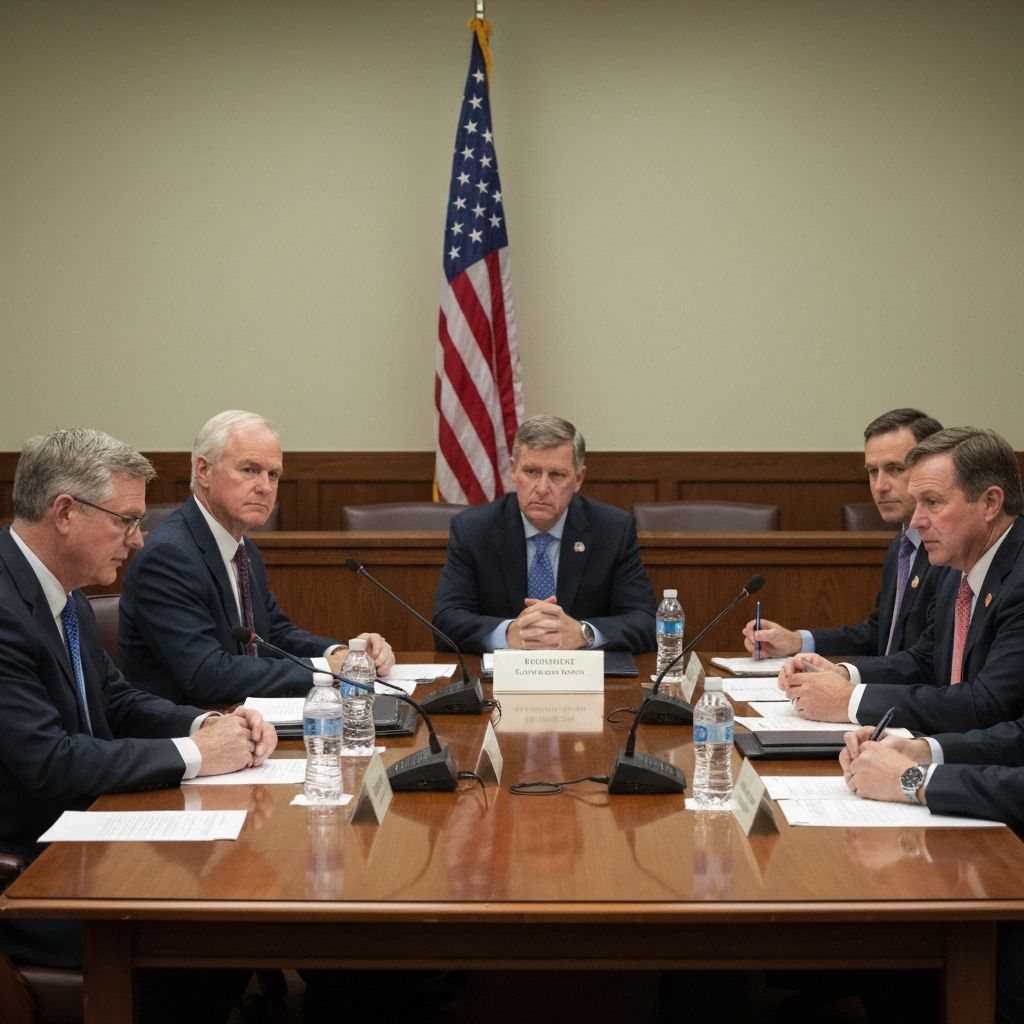
California’s Senate Bill 1047, the Safe and Secure Innovation for Frontier Artificial Intelligence Models Act, was introduced in 2024 by state senator Scott Wiener. It proposed safety testing, incident reporting, and a shutdown-capability requirement for developers of large frontier AI models trained above a specified compute threshold. It was not a schools bill. It was aimed at the companies building the models.
Quick Answer
SB 1047 was California’s 2024 frontier AI safety bill, aimed at model developers rather than schools. Governor Newsom vetoed it in September 2024. Follow-up laws like SB 942, the California AI Transparency Act, are more directly relevant to what students see. Districts should watch SB 53 or its successors and treat local policy as the operative layer.
The full explainer covers what SB 1047 was, why the veto mattered, what California has done in its place, and how the state’s posture compares to Oklahoma’s more prescriptive schools bill.

What SB 1047 Actually Was
The legislature passed SB 1047 in the summer of 2024. Governor Gavin Newsom vetoed it in September of that year, citing concerns that the bill’s thresholds and testing regime would not scale to smaller models that might pose similar risks. The veto message signaled that California intended to keep working on frontier AI regulation with a different structure.
For the purposes of this piece, the important thing about SB 1047 is that it never became law. Any story that treats it as an active statute affecting classrooms today is wrong.
Any story that treats SB 1047 as an active statute affecting classrooms today is wrong.
The Working Educators editors
Why the Veto Mattered for Schools
Even though SB 1047 targeted model developers rather than districts, the veto shaped the environment in which schools now operate. If passed, the bill would have created a public safety-testing regime that districts could have pointed to when explaining to families why a given classroom AI tool was or was not permitted. The veto removed that anchor.
It also signaled that California would rely on a patchwork of narrower bills rather than a single frontier statute. That is exactly what has happened. School leaders looking for one clean piece of state law to cite in an AI policy memo are still looking.
What California Passed Instead in 2025 and 2026
Two follow-up laws are more relevant to schools than SB 1047 would have been. SB 942, the California AI Transparency Act, requires certain covered generative AI providers to offer disclosure and provenance tools for AI-generated content. It affects the vendors students use rather than the schools directly, but its practical effect is to make it easier for teachers to identify AI-generated material by inspecting content metadata.
Senator Wiener’s follow-up frontier bill, SB 53, revisits the SB 1047 project with a narrower scope and different thresholds. If passed and signed, it would restore some of the safety-testing infrastructure the SB 1047 veto removed. As of our editing date, districts should watch its status and not assume any specific version is law.
For the classroom, the practical takeaway is that California’s statewide framework is a moving target. Local policy remains the operative layer. Districts drafting AI guidance should treat state law as background and their own written policy as the enforceable document.
How It Compares to Oklahoma SB 1734
Oklahoma’s SB 1734, covered in our explainer, took the opposite approach. It regulates AI use inside K-12 schools directly, requires district policies, and sets timelines for implementation. It is narrower than SB 1047 would have been and more prescriptive about schools.
California’s vetoed frontier bill would have created infrastructure around model developers. Oklahoma’s enacted schools bill creates obligations for districts and teachers. Both approaches have costs. A frontier-only regime leaves schools without state-level classroom guidance. A schools-only regime leaves the underlying models unregulated at the state level.
Districts operating in California are in the more improvisational position. They have to write policy without a state-level anchor comparable to Oklahoma’s. Our policy guide is written for exactly this situation.
What Districts Should Watch
Four things worth tracking, in rough order of likely near-term impact. First, the status of SB 53 or any successor frontier bill from Senator Wiener. Second, implementation guidance for SB 942 and any related disclosure rules that shape what students see when they use consumer AI tools. Third, California Department of Education guidance for K-12 AI use, which has been advisory rather than regulatory to date. Fourth, related student data privacy amendments that affect procurement of AI classroom tools.
None of this replaces the work of writing local policy. It shapes the environment in which that policy has to hold up. Public sources on any specific bill’s status are best checked directly at leginfo.legislature.ca.gov and through mainstream news coverage of veto messages and follow-up legislation.
Frequently Asked Questions
Is SB 1047 currently law?▼
No. Governor Newsom vetoed it in September 2024.
Did SB 1047 regulate schools?▼
No. It targeted developers of frontier AI models trained above a specified compute threshold.
What replaced it?▼
Nothing directly. California has passed narrower AI bills like SB 942 and is considering follow-up frontier legislation such as SB 53.
Should a California district cite SB 1047 in its AI policy?▼
No. Cite laws that are actually in force, and treat SB 1047 as historical context if you cite it at all.
Where do I check a bill’s status?▼
Directly at leginfo.legislature.ca.gov, and through reputable news coverage.
The Bottom Line
SB 1047 is a useful case study in how state AI policy is being written and how easily veto messages reshape the environment schools have to plan inside. It is not, itself, a schools statute.
California districts are in the harder position of writing local AI policy without a single state anchor. That makes local drafting more important, not less.