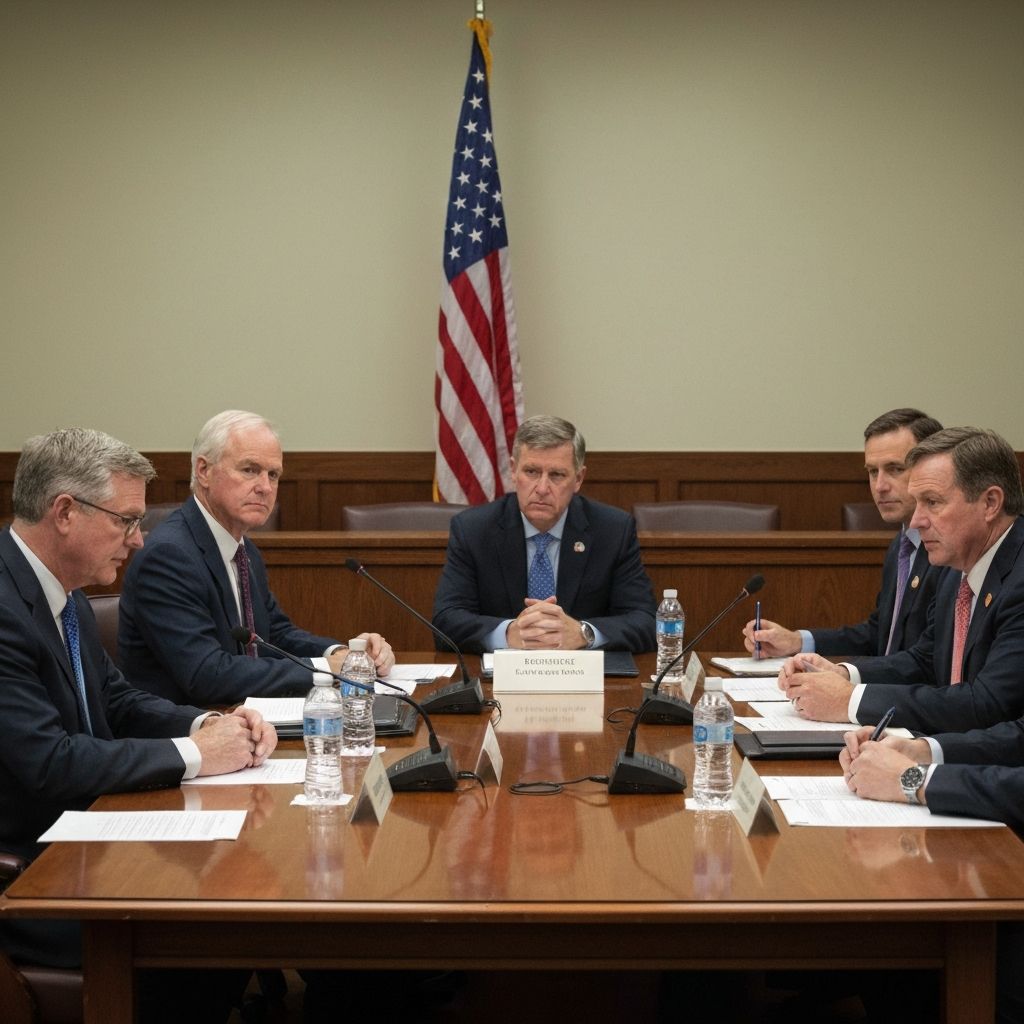
The Responsible Technology in Schools Act applies to every public school district, charter school, and technology center in Oklahoma. At its core, the law requires three things. First, each district must adopt a written policy governing how generative artificial intelligence tools are used by staff and students. Second, the district must provide ongoing professional development on AI literacy and safe use. Third, the district must publish clear notice to parents and students about which AI systems are in use and what data they collect.
Quick answer
Oklahoma SB 1734, the Responsible Technology in Schools Act, requires every K-12 district in the state to adopt a written artificial intelligence policy, provide staff training on AI use, and publish transparency notices for parents and students. Signed by Governor Stitt on May 12, 2026, the law sets a compliance deadline in the 2026-27 school year and positions Oklahoma as one of the first states with a comprehensive statutory framework for AI in schools.
The bill is short by statutory standards but unusually specific about what districts must produce. The requirements fall into three buckets, policy, training, and transparency, each with its own deadline and its own documentation burden. Here is what every superintendent, school board member, and curriculum director needs to know.

What SB 1734 Requires
The statute does not ban any particular tool. It does not prescribe a specific curriculum. Instead, it forces every district to make its choices visible and defensible. The full bill text and legislative history are available through the LegiScan record for SB 1734, and Senator Seifried's office has posted explainers and committee statements through her March 2026 press release archive.
The bill also reserves authority for the State Department of Education to publish model policy language districts may adopt directly. That guidance is expected during the 2026-27 academic year, which gives small districts without internal counsel a path to compliance without commissioning custom policy work.
SB 1734 does not ban any particular tool. It forces every district to make its choices visible and defensible.
Working Educators editorial position
The Timeline
SB 1734 was introduced in February 2026 and moved through committee in early March. The Senate Journal for March 23, 2026 records the floor vote. The House concurred in late April, and Governor Stitt signed the bill on May 12, 2026. The Governor's office posted the signing announcement through its official newsroom.
The law takes effect November 1, 2026, the standard effective date for non-emergency Oklahoma statutes passed in regular session. Districts are expected to have written policies adopted and posted before the start of the 2027-28 school year. Training requirements phase in during 2026-27, with full implementation required by July 1, 2027.
Districts that fail to comply face no immediate financial penalty in the bill as written, but compliance becomes a prerequisite for certain state grant programs starting in fiscal year 2028. That structural pressure, tying funding eligibility to policy adoption, is how Oklahoma typically enforces statutory mandates without creating a new bureaucracy.
What Districts Must Build
The policy requirement is the heaviest lift. Each district's written AI policy must address acceptable use by staff, acceptable use by students, data privacy and student data protection, academic integrity expectations, and a procedure for reviewing new AI tools before they are deployed. Districts that already maintain acceptable use policies for technology will find significant overlap, but the statute requires AI-specific language rather than generic technology references.
Training is the second pillar. The bill requires that all certified staff receive professional development on AI literacy, recognizing AI-generated content, and the limitations of AI detection tools. The latter point is notable: legislators specifically heard testimony about false-positive rates in detection software during committee hearings, as KOSU's coverage of the 2026 education bill cycle noted, and the training requirement reflects that concern.
Transparency is the third pillar and the most visible to families. Districts must publish, in plain language, a list of AI systems used in instruction or administration, the categories of student data those systems can access, and the process by which parents can opt students out where federal and state law permits. Our editorial position is that this third pillar is the part districts most often skip when implementing AI policies, and it is the part SB 1734 makes hardest to skip.
Why This Matters Beyond Oklahoma
Oklahoma is not the first state to pass AI-in-schools legislation, but SB 1734 is one of the cleanest examples of a comprehensive framework that does not pick winners and losers among vendors. California, Tennessee, and Virginia have all moved on adjacent legislation in 2025 and 2026, and several state education agencies are using Oklahoma's statutory language as a reference point.
The political coalition that passed SB 1734 is worth studying. The bill drew support from rural superintendents worried about data privacy, urban districts worried about academic integrity, and conservative legislators worried about parental rights. That combination is unusual in education policy and suggests AI governance may be one of the few areas where genuinely bipartisan frameworks remain possible.
For policy context across other states, see our coverage at the AI Education Policy hub, and for related municipal-level work, see our breakdown of the Philadelphia school district's policy approach.
The Compliance Checklist
For Oklahoma district leaders facing the 2027 deadline, the work breaks into a clear sequence. First, designate an AI policy owner, typically the assistant superintendent for curriculum or technology, not a committee. Second, inventory every AI tool currently in use, including tools embedded in existing platforms like Canvas, Google Workspace, and Microsoft 365. Many districts discover during this step that they are running more AI than they realized.
Third, draft the written policy. Districts without internal counsel should wait for the State Department of Education's model language rather than commissioning bespoke work. Fourth, build the training plan, most districts will fold AI literacy into existing professional development days rather than adding new ones. Fifth, publish the transparency notice on the district website and in the student handbook for the 2027-28 year.
For background on how AI detection tools fit into academic integrity policy, a question that comes up repeatedly during training, see our work on AI detection in schools. And for the broader instructional context, our teaching-with-AI resource tracks classroom-level practice that complements policy compliance.
Frequently Asked Questions
When does Oklahoma SB 1734 take effect?▼
The law takes effect November 1, 2026. Districts must have written AI policies adopted before the 2027-28 school year, with full training implementation required by July 1, 2027.
Does SB 1734 ban any AI tools in Oklahoma schools?▼
No. The Responsible Technology in Schools Act does not ban any specific AI tool. It requires districts to adopt written policies, train staff, and publish transparency notices about which AI systems they use and what data those systems collect.
Who sponsored SB 1734?▼
State Senator Ally Seifried sponsored the bill in the Oklahoma Senate during the 2026 legislative session. It passed both chambers with bipartisan support and was signed by Governor Kevin Stitt on May 12, 2026.
What happens if a district does not comply with SB 1734?▼
The statute does not impose direct financial penalties, but compliance becomes a prerequisite for certain state grant programs starting in fiscal year 2028. That structural funding pressure is the law's primary enforcement mechanism.
Will other states pass similar laws?▼
Several state legislatures are watching Oklahoma's framework. California, Tennessee, and Virginia have moved on adjacent legislation, and state education agencies elsewhere are using SB 1734's statutory language as a reference for their own policy work.
The Bottom Line
The Responsible Technology in Schools Act is not a flashy law. It does not prohibit any tool, name any vendor, or pick any winners. It does something more durable: it forces every Oklahoma district to write down what it is doing with AI, train the adults who use it, and tell families which systems are in the building. That is the work most districts have been avoiding for three years.
Our editorial position is that SB 1734 is a model worth copying. It treats AI as a governance problem rather than a moral panic, sets specific deadlines, and leaves room for the State Department of Education to support smaller districts that cannot afford their own policy shops. State legislatures considering 2027 sessions should read the statute and the committee record before drafting their own.
For Oklahoma district leaders, the timeline is tight but workable. Designate an owner, wait for the state model language, fold training into existing professional development, and publish the transparency notice. The districts that move first will set the implementation norms the rest of the state copies.