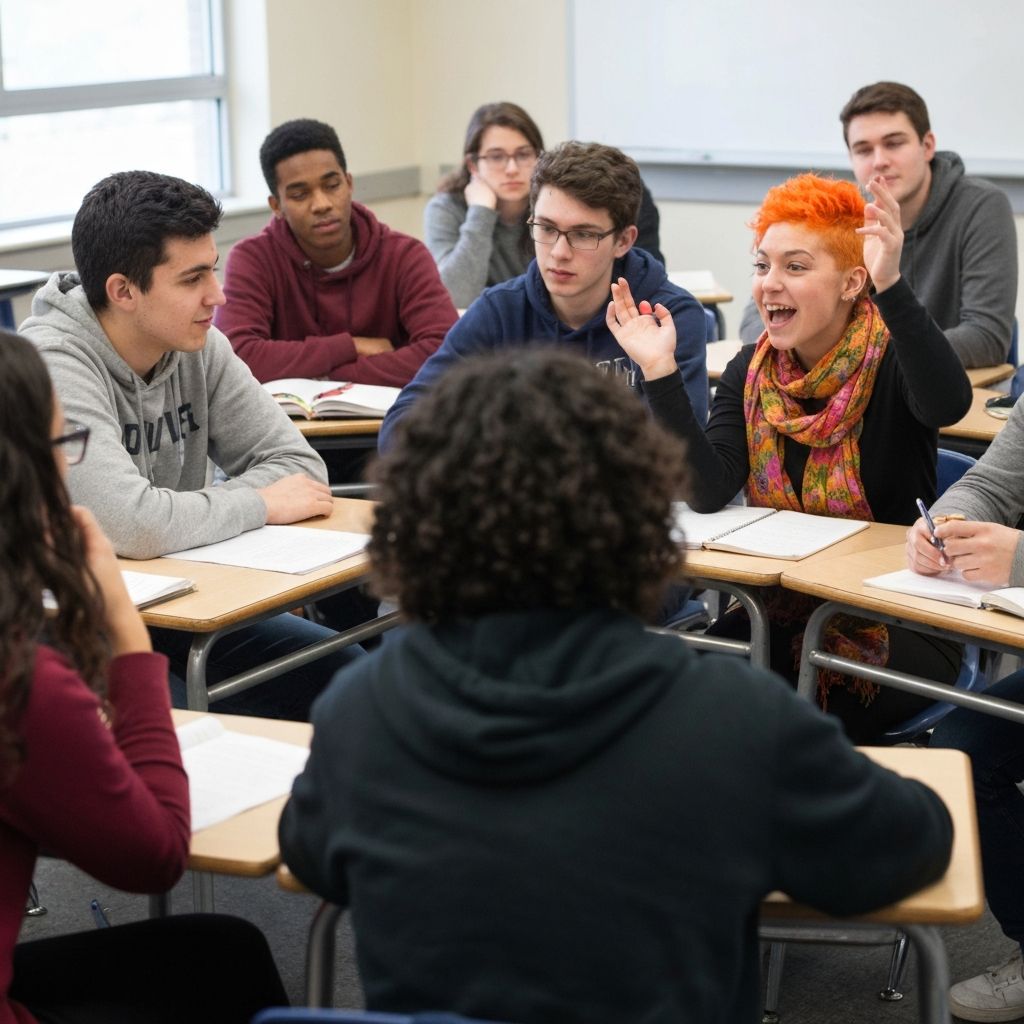
The debate about AI in education is happening mostly among adults, teachers, administrators, policymakers, tech companies. But the people most affected are students. We wanted to hear from them directly. What do young people actually think about AI in their classrooms?
The Survey
In collaboration with student organizations across 12 states, we surveyed 847 high school and college students about their experiences with AI in education. We asked about their use of AI tools, their perceptions of fairness, and what they wish adults understood.
The results challenged assumptions on all sides.
Students surveyed
Think detection is "sometimes fair"
Know someone falsely accused
"Everyone Uses It", The Normalization Question
When asked how common AI use is among their peers, the most common response was some version of "everyone does it." But when we dug deeper, the picture was more nuanced.
"I think most people have used it at least once. But there's a difference between asking it to explain a concept and having it write your entire paper. Most kids I know are somewhere in the middle."
Students distinguished between different types of AI use:
- "Research mode": Using AI to understand concepts, find sources, or get unstuck
- "Assistance mode": Having AI help with brainstorming, outlining, or editing
- "Replacement mode": Having AI generate the actual submitted work
Many students considered the first two legitimate, even if against official policy. The third was more controversial even among students.
Students Who Think Detection Is Fair
"If someone submits AI-written work as their own, they're cheating. I spend hours on my essays. It's not fair if someone else gets the same grade for five minutes of prompting."
Students who support detection often cite fairness to their peers who do the work honestly. They also mention concern about skill development, they want to actually learn to write, not just get grades.
"I'm going to college next year. I need to know how to write without AI. If I cheat my way through high school, I'm only cheating myself."
Students Who Think Detection Is Unfair
"My friend got flagged for an essay she 100% wrote herself. She had to prove her innocence, which is backwards. The tool was wrong, and she was treated like a criminal."
The biggest concern among skeptical students was false accusations. Thirty-one percent of respondents said they personally knew someone who was wrongly flagged by detection software. Whether accurate or not, this perception shapes how students view the entire system.
"The detectors are wrong all the time, but teachers trust them like they're perfect. That feels like guilty until proven innocent."
The Students Caught in the Middle
Perhaps the most interesting voices came from students who held complicated, seemingly contradictory views:
"I've used AI when I was desperate, and I know it was wrong. But I also got flagged once for something I actually wrote. Both things can be true. The system is broken, AND some kids are cheating."
These students recognize the legitimacy of concerns on both sides. They want academic integrity and they want fair treatment. They don't see why those should be in conflict.
What Students Want Teachers to Know
We ended the survey with an open-ended question: "What do you wish your teachers understood about students and AI?" The responses clustered around several themes:
1. "We're under more pressure than you realize"
Students repeatedly mentioned course loads, college admissions, family expectations, and economic stress. AI becomes attractive not because they don't want to learn, but because they're overwhelmed.
2. "The rules aren't clear"
Many students said they genuinely don't know what's allowed. Is using AI to brainstorm okay? What about grammar checking? The lack of clear, consistent policies creates confusion.
3. "Don't just tell us no, tell us why"
Students are more likely to follow rules they understand. Blanket bans without explanation feel arbitrary. Explaining the purpose of assignments and what skills they build makes compliance feel meaningful.
4. "We know AI is the future"
Students see adults using AI everywhere, at work, in the news, in daily life. They want preparation for a world where AI is ubiquitous, not pretending it doesn't exist.
Moving Forward Together
The students we surveyed aren't a monolith. They disagree with each other, just like adults do. But one thing was consistent: they want to be part of the conversation, not just the subject of it.
Working Educators believes student voices should inform policy. We'll continue to create spaces for young people to share their perspectives and advocate for their inclusion in decisions that affect their education.