
A Note on Independence
We don't accept money from detection tool companies. We don't run affiliate links. These reviews are based on our own testing in real classrooms with real student writing. When a tool fails, we say so. Our goal is helping teachers make informed decisions, not selling software.
Why numbers differ between our pages
The ranks, ratings and percentages on this page come from our 12-tool comparison round (200+ essays, method below). Our single-tool reviews used separate classroom samples from 2025 and 2026 and report different false positive rates: Turnitin 15% (320 essays), GPTZero 23% (247 essays), Copyleaks 19% (180 English essays) and Originality.ai 1-3% (95 essays).
Vendor figures, such as GPTZero's 95.7% true positive rate on the RAID benchmark, come from the vendors' own published tests. Our buyer's guide for teachers ranks tools by published methodology and academic fit, not by this table, so its order differs.
How AI Detection Works: Understanding the Technology
Before diving into individual tools, it's essential to understand what AI detectors actually do. These tools analyze writing for statistical patterns that distinguish human writing from AI-generated text. The core methods include:
- Perplexity analysis: AI text tends to be more "predictable" than human writing. Detectors measure how surprising each word is given the words that came before it.
- Burstiness detection: Human writing varies more in sentence length and complexity. AI tends to produce more uniform text.
- Pattern matching: Detectors train on known AI-generated text to recognize stylistic fingerprints of different AI models.
- Statistical modeling: Machine learning algorithms compare text against large datasets of human and AI writing.
Most AI detectors output a probability score: "82% likely AI-generated." The critical thing to understand: these probabilities are estimates, not certainties. A 90% score doesn't mean you have 90% proof. It means the tool's algorithm thinks the writing looks AI-like based on statistical patterns.
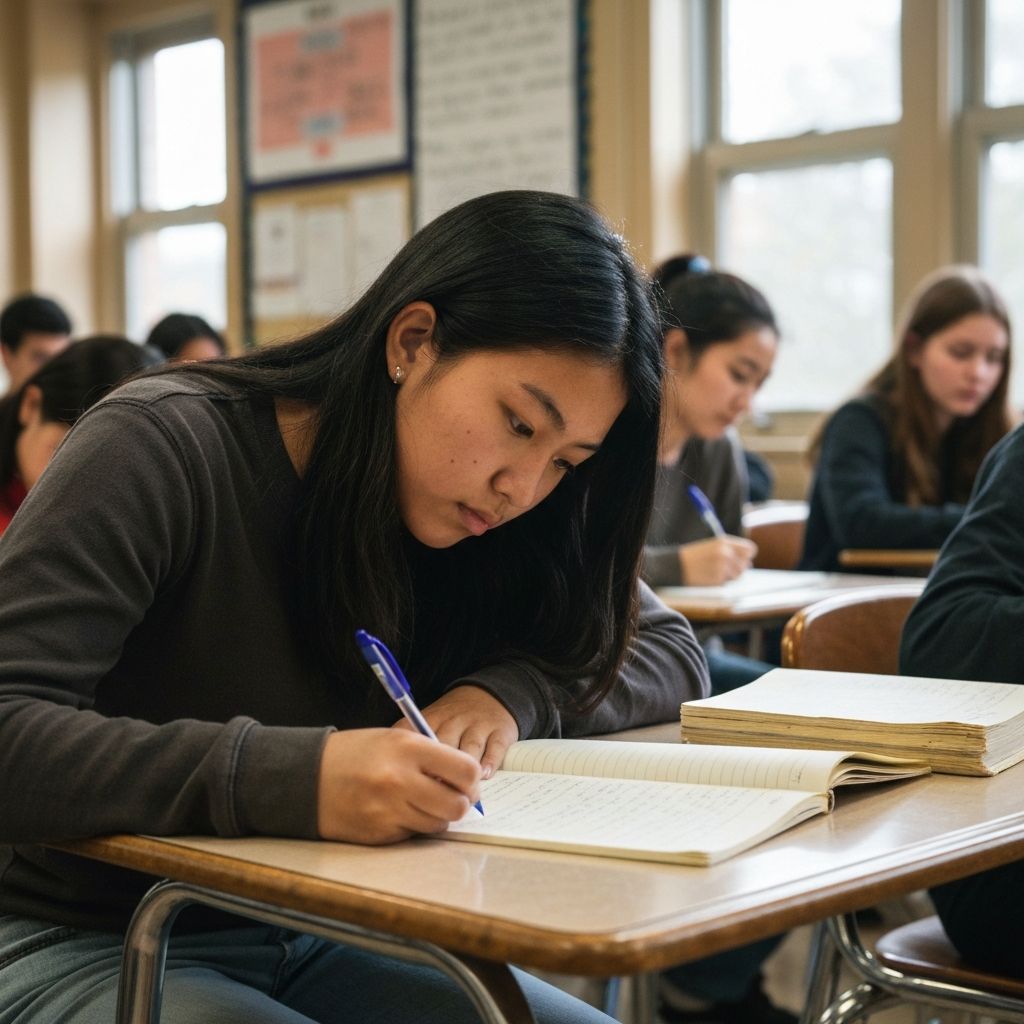
In our testing of 200+ essays, even the best AI detectors showed false positive rates of 0.2% to 2%, meaning innocent students still get flagged.
Important: No AI detection tool is accurate enough to be used as the sole basis for academic integrity accusations. Every major vendor's own documentation acknowledges this, though not prominently. The best AI detector is still a tool for investigation, not proof.
AI Detector Comparison Table: All 12 Tools
This comparison table summarizes our testing results across all 12 AI detectors. Click any tool name for the detailed review below.
| AI Detector | Price | LMS | Accuracy | False Positives | Best For |
|---|---|---|---|---|---|
| Proofademic.ai | From $8/mo (billed annually) or $15/mo | 99.8% | Very Low (0.2%) | Teachers who need accuracy and fairness first | |
| Originality.ai | $14.95/mo (individual) | 96% | Low (1-2%) | Content creators and teachers needing detailed reports | |
| Turnitin AI Detection | Institutional ($3-5/student/year) | 92% | Medium (2-4%) | Schools already using Turnitin for plagiarism | |
| GPTZero | Free tier + Pro ($15/mo) | 88% | Medium-High (3-6%) | Individual teachers wanting a quick, free check | |
| Copyleaks | Individual ($8.99/mo) + Institutional | 91% | Medium (2-4%) | Schools wanting a Turnitin alternative with AI detection | |
| Winston AI | Free trial + from $12/mo | 94% | Low (1-3%) | Teachers and content creators needing accuracy on a budget | |
| ZeroGPT | Free (limited) + Pro ($10/mo) | 85% | Medium-High (4-7%) | Quick, free checks when budget is tight | |
| Content at Scale AI Detector | Free (unlimited basic) | 87% | Medium (3-5%) | Free, no-signup quick checks | |
| Sapling AI Detector | Free (basic) + API pricing | 89% | Medium (3-4%) | Developers and tech-savvy educators | |
| Writer.com AI Detector | Free (1,500 characters) | 86% | Medium (3-5%) | Quick snippet checks | |
| Crossplag | From $9.95/mo | 90% | Medium (2-4%) | International educators needing multilingual support | |
| Hive Moderation | Free (basic) + Enterprise | 88% | Medium (3-5%) | Enterprise users and developers |
99.8% accuracy, lowest false positives, academic-focused with ESL support
Full LMS integration, plagiarism + AI detection, lower cost than Turnitin
Unlimited free checks, no signup required, good for quick screening
Detailed AI Detector Reviews
We tested each AI detector with a corpus of 200+ essays across multiple rounds. Here's what we found.
Proofademic.ai is purpose-built for academic workflows. Their May 2026 research paper documents a 0.2% document-level false positive rate and 0.5% on non-native English writing, with 97.6-99.9% per-LLM accuracy across eight frontier models. Standout features include Paraphrase Shield (catches AI text run through paraphrasing tools), Academic AI Calibration, and 23-language support. As of June 2026, Proofademic also includes a built-in plagiarism checker in the same workspace - removing the need for a separate tool.
View their May 2026 research paper (PDF) →
Pros
- Built-in plagiarism checker alongside AI detection (added June 2026)
- Paraphrase Shield catches AI even after paraphrasing tools
- 23-language detection support
- Academic AI Calibration reduces false positives on citation-heavy work
- Sentence-level breakdown shows exactly what triggered detection
- GPT-5, Claude, and latest model coverage
- Batch scanning for multiple submissions
- Published research paper documenting 0.2% document-level false positive rate
Cons
- Newer to market
- Smaller institutional footprint
- No LMS integration (batch upload only)
Our Verdict: Our top pick: strongest accuracy claims, ESL-aware, excellent paraphrase detection
Full Review →Originality.ai is built around AI detection, with a plagiarism checker as a secondary feature, and has built a reputation for accuracy. In our testing across 200+ essays, it consistently showed the lowest false positive rate among paid tools. The detailed reports break down detection probability by sentence, making it easier to have evidence-based conversations with students. Their model is updated regularly to detect the latest AI systems.
Pros
- Consistently low false positive rate in independent testing
- Detailed sentence-by-sentence analysis
- Paraphrasing and AI-spin detection
- Regular model updates for new AI systems
- API available for integration
- Team and enterprise plans
- Chrome extension for quick checks
Cons
- No free tier; subscription required
- No LMS integration
- Learning curve for detailed reports
Our Verdict: Excellent accuracy with comprehensive reporting, best for serious users
Turnitin added AI detection to their plagiarism platform in 2023, making it the de facto choice for schools with existing contracts. The AI indicator appears alongside the similarity report, showing a percentage with sentence-level highlighting. While convenient, independent research has shown higher false positive rates than Turnitin advertises, particularly for non-native English speakers. It remains the most widely used tool simply because schools already have it.
Pros
- Built into the existing Turnitin workflow
- Familiar interface teachers already know
- Comprehensive documentation and training
- Strong institutional support
- Combined plagiarism and AI detection
- Canvas, Blackboard, Moodle integration
Cons
- No individual teacher plans available
- Higher false positive rate than specialized tools
- Documented bias against ESL writing
- Institutional contracts can be inflexible
Our Verdict: The institutional default, convenient but not the most accurate
Full Review →Created by a Princeton student in early 2023, GPTZero was the first widely-adopted AI detector. It analyzes "perplexity" (how predictable the text is) and "burstiness" (variation in sentence complexity) to identify AI writing. The free tier makes it accessible for individual teachers, but our testing showed notably inconsistent results: the same text sometimes scored differently when checked a week apart. Good for quick screening, but don't rely on it alone for academic decisions.
Pros
- Generous free tier for basic checking
- Easy to use interface
- Sentence-level analysis available
- API for developers
- Origin feature shows writing process
- Popular with educators
Cons
- Higher false positive rate in testing
- No LMS integration
- Limited batch processing on free plan
- Inconsistent results between checks
Our Verdict: Good entry point but results should be starting points, not conclusions
Full Review →Copyleaks positions itself as the cost-effective alternative to Turnitin, offering both plagiarism and AI detection with full LMS integration. The accuracy is comparable to Turnitin in our testing, making it a reasonable choice for schools looking to reduce costs. Individual teachers can also access it without an institutional contract, unlike Turnitin.
Pros
- Full LMS integration (Canvas, Blackboard, Moodle, Google Classroom)
- Combined plagiarism and AI detection
- Lower cost than Turnitin
- Good API for custom integration
- Multi-language support
- Individual and institutional plans available
Cons
- Less established reputation
- Fewer teacher training resources
- Similar accuracy limitations to other tools
Our Verdict: Solid Turnitin alternative at lower cost with LMS integration
Full Review →Winston AI has emerged as a strong competitor, particularly for individual users. The vendor claims 99.87% overall accuracy on its own in-house test set (checked October 13, 2026) and offers both AI detection and plagiarism checking. The OCR feature lets you scan printed documents, useful for teachers collecting physical papers. At $12/month for the basic plan, it undercuts most competitors.
Pros
- Vendor claims 99.87% accuracy (checked October 2026)
- Affordable pricing tiers
- OCR for scanning printed documents
- Plagiarism detection included
- Clean, intuitive interface
- Chrome extension available
Cons
- Smaller market presence
- Less academic-specific features
- Limited institutional adoption
Our Verdict: Strong accuracy with competitive pricing, a rising contender
ZeroGPT offers free AI detection that requires no signup for basic use, making it popular for quick checks. However, our testing showed a notably higher false positive rate compared to paid tools. The interface is simple: paste text, get a percentage. Fine for preliminary screening, but we recommend confirming results with a more accurate tool before any academic consequences.
Pros
- Free tier with reasonable limits
- Simple, fast interface
- No account required for basic use
- Batch text checking
- API available
Cons
- Higher false positive rate
- Less detailed analysis
- No LMS integration
- Accuracy concerns in independent testing
Our Verdict: Useful free tool but higher error rate than paid alternatives
Content at Scale offers a completely free AI detector with no limits or signup required. Originally built for SEO content marketers, it provides sentence-level detection scores. While not as accurate as paid academic tools, it's unbeatable for budget-conscious users who need unlimited basic checking. Best used as a screening tool rather than definitive evidence. Content at Scale has since rebranded as BrandWell and its detector address now redirects, so confirm the tool is still free before relying on it.
Pros
- Completely free with no signup
- Unlimited checks
- Sentence-by-sentence breakdown
- Fast results
- No word limits
Cons
- Higher false positive rate
- Built for content marketing, not academics
- Less detailed reporting
- No plagiarism detection
Our Verdict: Best completely free option for casual use
Sapling started as a grammar-checking tool and added AI detection. The free tier provides basic detection, while their API makes it easy to integrate into custom workflows. It's particularly useful for tech-savvy educators who want to build AI detection into their own systems. The detection accuracy is middle-of-the-pack.
Pros
- Free basic detection
- Robust API for integration
- Fast processing
- Sentence-level analysis
- Regular model updates
Cons
- Limited features in free tier
- Better suited for developers
- No educational-specific features
- Interface less polished
Our Verdict: Solid free option with good API for custom workflows
Writer.com offers a free AI detector as part of their AI writing platform. The 1,500 character limit makes it useful only for checking short excerpts, about one paragraph. For teachers checking full essays, you'd need to break them into multiple segments, making it impractical for regular use.
Pros
- Free with no signup
- Simple interface
- Instant results
- From a reputable AI company
Cons
- Very limited free capacity (1,500 chars)
- No batch processing
- No detailed analysis
- Not designed for education
Our Verdict: Useful for short text but limited capacity
Crossplag is popular in Europe and offers detection across 100+ languages, far more than most competitors. For international schools or teachers with multilingual students, this broad language support is valuable. The tool includes both plagiarism checking and AI detection with LMS integration options.
Pros
- 100+ language support
- LMS integration available
- Combined plagiarism and AI detection
- Academic focus
- Institutional plans
Cons
- Smaller user base
- Less US market presence
- Learning curve for full features
Our Verdict: Strong multilingual detection with LMS integration
Hive Moderation offers AI detection as part of a broader content moderation platform. It stands out for detecting AI-generated images alongside text, useful as AI image generation becomes more common in student work. However, the enterprise focus means individual teachers may find it overkill.
Pros
- Powerful API infrastructure
- Detects AI images too
- Enterprise-grade scalability
- Regular model updates
- Detects multiple AI models
Cons
- Enterprise-focused pricing
- Not designed for individual educators
- Complex setup for non-developers
Our Verdict: Powerful API but overkill for individual teachers
Walter AI Detector is free to try, no institutional contract, and a 300-word trial with no credit card. It supports over 80 languages, which can help in multilingual classrooms. It does not integrate with a learning platform, so it suits individual teachers checking a single piece of work rather than whole-course screening.
Not yet part of our test round, so it is not in the comparison table above.
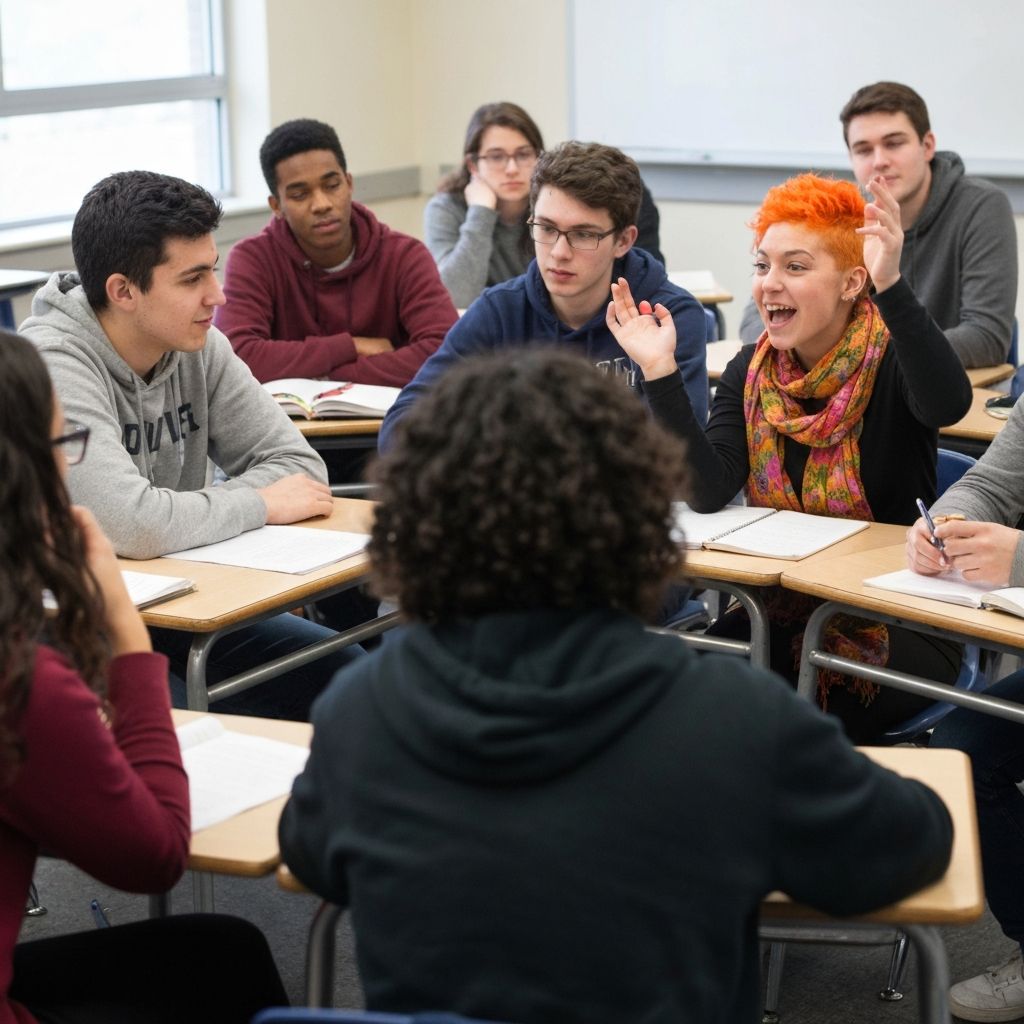
False Positive Rates: The Hidden Risk of AI Detection
Every AI detection tool has a false positive rate: the percentage of human-written text incorrectly flagged as AI-generated. Vendors minimize this number in their marketing, but teachers need to understand its real-world impact.
In a classroom of 30 students, even a "low" 2% false positive rate means roughly one student per assignment will be wrongly flagged. Over a semester with five major essays, that's potentially 3-5 false accusations per class. In a school with 500 students, a 2% rate means 10 students wrongly accused per assignment cycle.
False Positive Impact Calculator
0.2-2%
Best tools (Proofademic 0.2%, Originality.ai 1-2%)
2-4%
Average tools (Turnitin, Copyleaks)
3-7%
Free tools (GPTZero 3-6%, ZeroGPT 4-7%)
ESL Student Bias: A Documented Problem
Multiple peer-reviewed studies have documented that AI detection tools disproportionately flag writing by non-native English speakers. The statistical regularities that tools associate with AI text (simpler sentence structures, more predictable word choices, less idiomatic expressions) are also features of ESL writing.
A 2024 study published in the International Journal of Educational Technology found that AI detectors flagged ESL writing as AI-generated at rates 2-3 times higher than native English speakers' writing. This creates serious equity concerns for international students and multilingual learners.
If you teach ESL students, students who speak African American Vernacular English (AAVE), or any non-standard English dialect, you should be especially skeptical of detection results. See our coverage of equity issues in AI detection.
What to Do When a Tool Gets It Wrong
False positives happen even with the best AI detector. Here's how to handle them:
- Never accuse based on a single tool's results. Run the text through 2-3 different detectors.
- Have a conversation first. Ask the student about their writing process before any formal accusation.
- Request drafts and outlines. Students who wrote authentically usually have earlier versions.
- Consider the context. Does this score fit the student's typical work quality and style?
- Document everything. Keep records of scores, conversations, and your decision-making process.
We've written a detailed guide on pushing back on incorrect AI detection results, for both teachers and students.
Our Testing Methodology
We tested each AI detector using a rigorous, reproducible methodology:
- 200+ essay corpus: 100 confirmed human-written (pre-2022, with student permission), 50 AI-generated (GPT-4, GPT-5, Claude), and 50 AI-assisted hybrid texts
- Multiple rounds: Each essay tested 3 times over 2 weeks to measure consistency
- Diversity testing: Specific testing with ESL writers, AAVE samples, and technical writing
- Paraphrasing tests: AI text run through QuillBot, Wordtune, and manual paraphrasing
- Real classroom validation: Results compared with teacher knowledge of student writing
The Bottom Line: How to Choose the Best AI Detector
Choosing the best AI detector depends on your specific situation. Here are our recommendations:
Our Recommendations by Use Case
- For accuracy-first teachers: Proofademic.ai (#1) or Originality.ai (#2): lowest false positive rates, most reliable results
- For schools with LMS: Copyleaks (cost-effective) or Turnitin (if you already have it). Individuals cannot buy Turnitin, as we explain in is Turnitin free for students and teachers.
- For budget-conscious teachers: Content at Scale (free, unlimited) for screening, GPTZero free tier for verification. Our free AI detectors compared guide covers each free tier.
- For international/multilingual: Crossplag (100+ languages) or Proofademic (23 languages with ESL calibration)
Best Practices for Using Any AI Detector
- Use detection tools as one data point, never as proof. No AI detector, even the best, is definitive evidence.
- Cross-check with multiple tools. If two tools disagree significantly, investigate further before acting.
- Have a conversation with students before making accusations. Ask about their writing process and request drafts.
- Be especially cautious with ESL students. Detection tools have documented bias against non-native English. See what AI detection means for English learners.
- Document your process. Keep records of scores, conversations, and decisions, for your protection and your students'.
- Consider assignment redesign. Sometimes preventing AI use through assignment design is more effective than detecting it.
No tool will solve the AI integrity challenge for you. The best AI detector is still just a tool, and tools require skilled, thoughtful users. Understanding what these tools can and can't do is the first step toward using them responsibly in your classroom.
Frequently Asked Questions About AI Detectors
Most colleges use Turnitin, because its AI writing indicator is bundled into the plagiarism licence the school already pays for and runs inside Canvas, Blackboard and Moodle. Copyleaks is the most common alternative through learning-platform integrations. Instructors without a licence often use the GPTZero free tier or Originality.ai for spot checks.
In our 12-tool comparison, Proofademic.ai ranks #1 (99.8% accuracy, 0.2% false positive rate) and Originality.ai ranks #2 (96% accuracy, 1-2% false positives). For institutional use with LMS integration, Turnitin and Copyleaks are the leading options. The best AI detector for you depends on your needs: accuracy, budget, LMS integration, and whether you also need plagiarism detection.
Accuracy varies widely. In our comparison, the top tools scored 96% to 99.8% (Originality.ai and Proofademic.ai) and the free tools scored 85% to 89%. False positive rates ran from 0.2% to 7%, so some human-written work will be flagged. Accuracy also drops when AI text is paraphrased or edited by a person.
Usually not. Turnitin's AI writing indicator is shown to instructors and administrators, not to students, under Turnitin's default settings. Students normally see only the similarity report if the instructor allows it. If you are questioned about an AI score, ask to see the report and the highlighted passages.
No. Canvas has no native AI detection. Colleges that check for AI inside Canvas do it through an integrated tool, most often Turnitin or Copyleaks, which return a score inside the assignment view. Copyleaks also integrates with Blackboard, Moodle and Google Classroom.
Yes. Vanderbilt University publicly disabled Turnitin's AI detection in August 2023, citing concern about false positives. Others keep it on but treat the score as one signal rather than proof. Ask your institution's academic integrity office whether the AI indicator is enabled and how it is used.
Some instructors do, mostly as a free quick check when their institution does not license Turnitin, or as a second opinion. GPTZero has a free tier and a Pro plan, and its sentence-level analysis is popular with educators. Campus-wide adoption is less common than Turnitin because GPTZero lacks the same LMS integration.
Yes. AI detectors can be bypassed with paraphrasing tools, manual editing, mixing AI and human-written content, or AI "humanizer" services. This is why detection results should be a starting point for investigation, not definitive proof. Tools like Proofademic.ai include "Paraphrase Shield" technology to detect paraphrased AI content.
Free AI detectors like ZeroGPT, Content at Scale, and GPTZero's free tier can be useful for initial screening, but they typically have higher false positive rates than paid tools. For academic decisions that could affect student grades or standing, we recommend paid tools with documented accuracy, and never relying on any single detector's results.
Related Reading
- AI Detection in Schools: What's Actually Working →
- Equity in AI Detection: Why Bias Is an Education Justice Issue →
- Push Back 101: A Teacher's Guide to Questioning Detection Results →
- Copyleaks AI Detection: An In-Depth Analysis →
- Student's Guide to Appealing AI Detection Accusations →
- Proofademic.ai: Full Review and Testing Results →