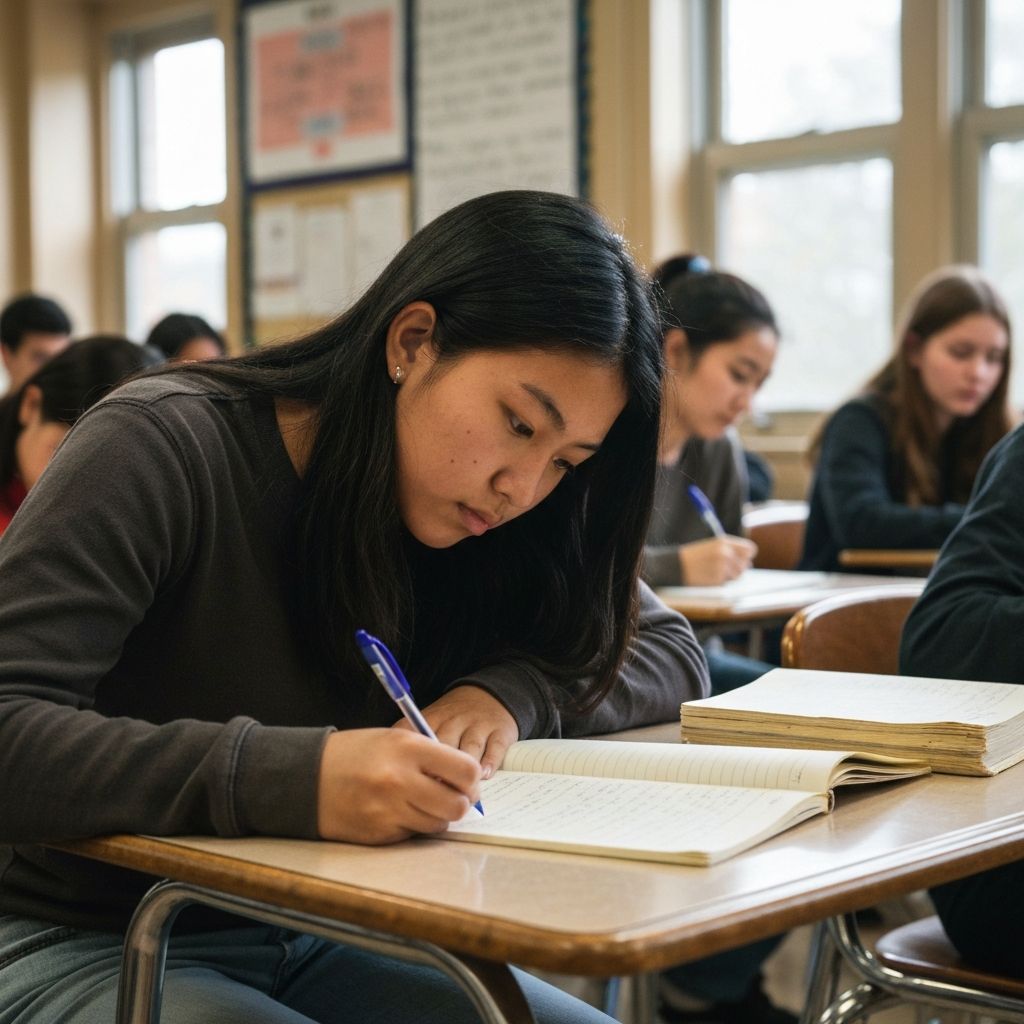
Ask ChatGPT to write a research paper on the causes of World War I, and you'll have a passable five-page essay in thirty seconds. It will have a thesis. It will have evidence. It will cite sources (though you'll need to check if they actually exist). For a traditional research paper assignment, it will do the job, which is precisely the problem.
The research paper as we've traditionally taught it, a formal, multi-page essay demonstrating mastery of a topic through secondary source integration, is exceptionally vulnerable to AI generation. Not because students are lazy, but because the assignment format itself invites substitution. If the goal is a polished product on a predetermined topic, AI can produce that product.
But research skills still matter. The ability to identify credible sources, evaluate evidence, synthesize information, and construct arguments is more important than ever in an age of information overload. The challenge is assessing these skills in ways that can't be easily outsourced to a machine.
We talked to teachers across the country who are successfully reimagining the research paper. Here are three approaches that work.
Why Traditional Research Papers Fail in the AI Age
Before exploring alternatives, it's worth understanding why traditional research papers are particularly vulnerable to AI:
- Product focus: We grade the final paper, not the process of creating it. AI excels at producing polished products.
- Generic topics: "Analyze the causes of the Great Depression" has been written thousands of times. AI has trained on all of them.
- Formal voice: Academic writing's conventions, objectivity, formal diction, predictable structure, are exactly what AI generates best.
- Secondary sources: Summarizing what experts have said is AI's bread and butter. There's no original observation required.
- Isolated work: The traditional paper is produced alone, outside of class, with no witness to the creation process.
The three approaches below address these vulnerabilities by shifting focus from product to process, from generic to specific, and from isolated to collaborative.
Approach 1: The Living Document
Instead of a finished paper, students produce a research log that documents their inquiry journey. The final "product" is the process itself.
How It Works
Students work in a shared Google Doc (or similar) where the teacher can see version history. Each week, they add:
- New sources found that week, with annotations explaining usefulness and credibility
- Questions that emerged from their reading
- Connections to other sources or to class discussions
- Dead ends explored and abandoned (and why)
- Evolving thesis statements showing how their thinking developed
The document grows over weeks, showing genuine intellectual development. A short reflective summary at the end synthesizes what they learned, both about the topic and about the research process itself.
Why It's AI-Resistant
AI can generate a finished paper, but it can't generate a authentic record of evolving thought over time. The version history shows real work happening, or its absence. The dead ends and abandoned directions reveal genuine inquiry that AI wouldn't include in a prompt response.
Teacher Tip
"I check version histories periodically, not just at the end. I'm looking for organic growth, additions, deletions, refinements over time. When someone pastes in a large block all at once without the iterative development I've been watching, that's a red flag."
Jennifer Park, AP Research, Seattle
Approach 2: The Multimodal Project
Students present their research through multiple formats, written, visual, oral, with each component building on the others.
How It Works
Instead of a single paper, the assignment includes:
- Annotated bibliography (6-8 sources) with evaluations of credibility and relevance
- Visual presentation (poster, infographic, or slides) that synthesizes key findings
- Written brief (2-3 pages) that makes an argument based on the research
- Live defense where students present and answer questions
Each component is assessed separately, with the live defense carrying significant weight. Students must be able to discuss their sources, explain their visual choices, and defend their conclusions extemporaneously.
Why It's AI-Resistant
AI can produce any single component, but the combination, and especially the live defense, requires genuine understanding. Students who've done the research can explain why they chose certain images, how one source contradicted another, what surprised them about their findings. Students who haven't can't.
Teacher Tip
"The oral component is where everything becomes clear. I ask questions that require them to make connections: 'How does your third source complicate what your first source claimed?' A student who really did the work can answer that. A student working from AI-generated text cannot."
Marcus Johnson, History Teacher, Atlanta
Approach 3: The Annotated Portfolio
Students curate and annotate primary sources, constructing an argument through their selection and commentary rather than through a traditional essay.
How It Works
Students select 8-10 primary sources related to their topic, documents, images, data sets, artifacts. For each source, they write:
- What the source is and where they found it
- What it reveals about their topic
- What questions it raises
- How it connects to other sources in their collection
- What's missing or limited about this source
An introduction explains their curation choices and the argument that emerges from the collection. A conclusion reflects on what they learned about working with primary sources.
Why It's AI-Resistant
The work lives in the specific choices: why this letter and not that one? Why include a photograph alongside a newspaper editorial? The curatorial logic, which requires original judgment, not just summary, is difficult to automate. And because students are working with primary sources rather than secondary analysis, they're engaging with material AI hasn't already digested and regurgitated.
Teacher Tip
"I require students to include at least two sources from our local historical society's digital archive. AI can't access those, and the annotations require really looking at what's there, not just summarizing what someone else said about it."
Lisa Chen, Social Studies, San Francisco
Implementation Tips
Switching to new assessment formats takes work. Here's what teachers recommend:
Start Small
You don't need to overhaul every assignment. Pick one major paper and redesign it. See what works before scaling up.
Scaffold Heavily
These approaches require skills students may not have practiced. Build in checkpoints, provide examples, and teach the process explicitly before expecting proficiency.
Be Transparent About Why
Explain to students that you're trying to assess what they actually know and can do, not just what they can produce. Frame it as authentic assessment, not as AI-proofing.
Adjust Your Rubrics
Traditional research paper rubrics don't work for these formats. Develop new criteria that value process documentation, source evaluation, and the ability to defend choices orally.
Common Objections (and Responses)
"Students need to learn to write research papers for college."
College is changing too. Many professors are implementing similar reforms. And the underlying skills, evaluating sources, synthesizing information, constructing arguments, are preserved in these alternatives. What changes is the format, not the learning.
"These take more time to grade."
True initially. But grading a research log or portfolio focuses on authentic engagement, which is often easier to assess than the surface features of a traditional paper. And you spend less time wondering if it's real.
"AI can still help with these."
Of course it can, and that's not necessarily bad. AI can be a legitimate tool in research. The difference is that these formats make AI assistance visible and require students to demonstrate understanding beyond what AI provides. Use AI to find sources? Fine. But you still have to evaluate them yourself. Get AI to summarize an article? Sure. But you have to connect it to others and defend that connection orally.
Conclusion
The traditional research paper served education well for decades. But the arrival of generative AI has exposed its fundamental vulnerability: it assessed product, not process. It prioritized polish over understanding. And it could be completed in isolation, with no verification that learning actually occurred.
The alternatives presented here, living documents, multimodal projects, annotated portfolios, share common features: they make process visible, require original judgment, and include components that can't be faked. They assess what we actually care about: can students find, evaluate, and use information to construct and defend arguments?
The research paper isn't dead. But it needs to evolve. The teachers we talked to aren't mourning the old format, they're excited about alternatives that feel more authentic, more rigorous, and more suited to the world their students will inhabit.
Have you redesigned research assignments in your classroom? Share what's working at our contact page.